Culture can't be planned. That’s a fact. A song blows up because someone used in a tiktok video. A sneaker sells out because the right person wore it on the wrong day and turn into a meme. And a hundred strategy decks are written about the luck of all of it.
We don't buy it.
Look closely at almost anything that broke through in the last ten years and you'll find a design underneath. Not a logo or a color palette, but decisions: which story was told first, what got cut, when it dropped and where. The accident is usually the last step of a very deliberate process. It's just the only step anyone sees.
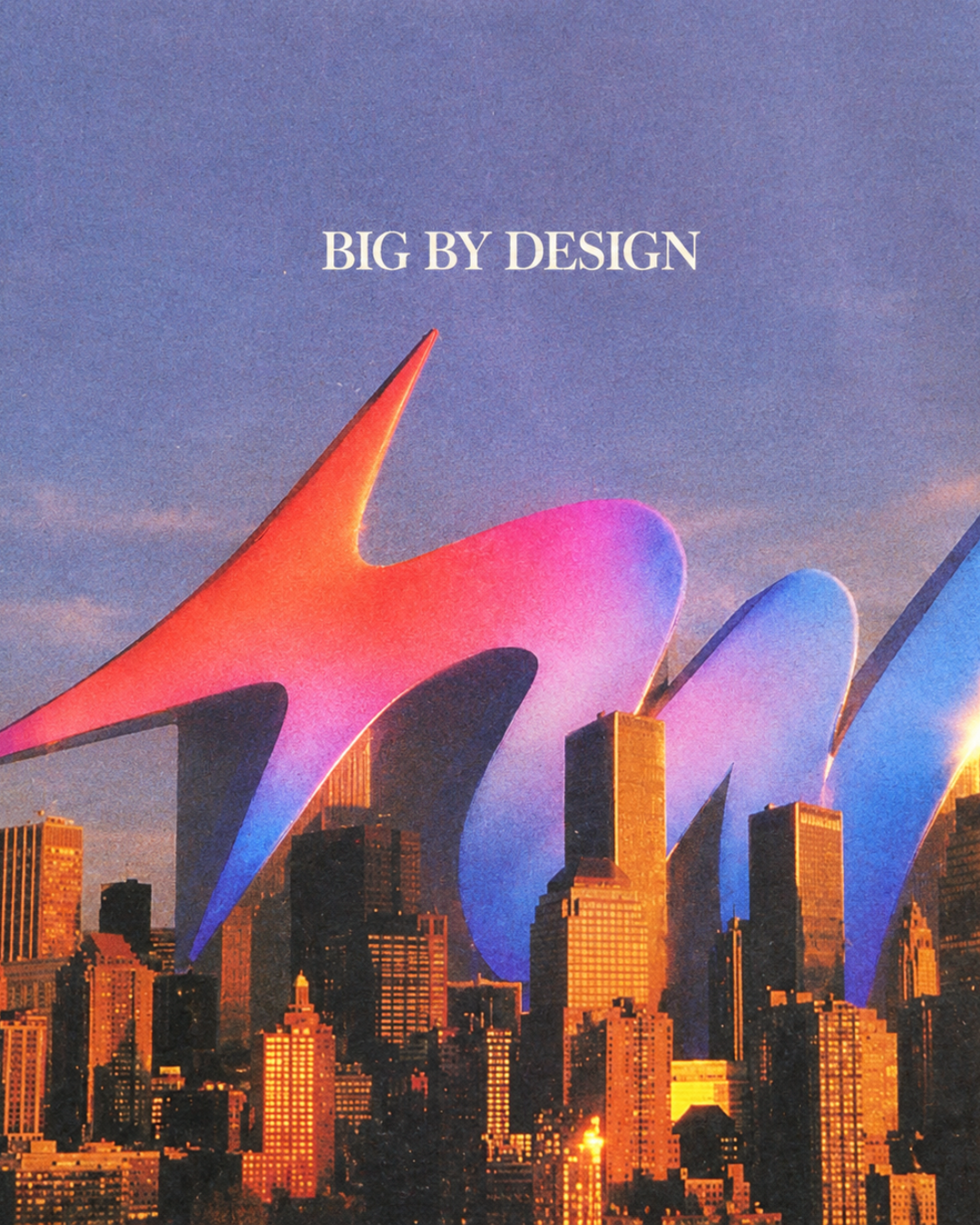
That is what we mean by Big by design. It isn't a slogan about size. It's a belief about cause and effect.
The age of the accident
Culture has never moved this fast, or been this easy to mistake for noise. The algorithm turned everyone into a publisher and every brand into a channel. The result is more content than anyone could watch in a lifetime, made every single day, most of it forgotten by evening.
In that environment, the industry learned the wrong lesson. If anything can go viral, the thinking goes, the job is to make more things and hope one sticks. Post more. Test more. Chase the trend while it's still warm.
It's a strategy that confuses volume with presence. Brands end up everywhere and nowhere, always in the conversation and never shaping it. The work that lasts does the opposite. It's made with fewer pieces and more intention. It looks effortless because the effort happened before the camera turned on.
Design is how culture thinks now
When we say design, we don't mean decoration. Design is the discipline of making choices on purpose, and today it's the language culture speaks.
Think about how people read the world now. The cover before the album. The grid before the person. The first second of a video before the story. Taste is judged at a glance. Aesthetics have become a kind of literacy, and audiences are fluent: they can tell instantly whether something was made by people who care, or by a committee that didn't.
That changes the job. A brand can no longer borrow culture by sponsoring it. It has to earn its place by making something that survives that fluent eye. Design is how you earn it. It's the frame that decides what a story means. It's the system that lets one idea live across twenty formats without losing its voice. It's the rigor that turns a good shoot into a campaign that still works six months later.
Before it's a trend
By the time something is called a trend, it's already late. The trend report arrives after the community has moved on, and the brand that follows it shows up to a party that's emptying out.
The real signals come earlier, and quieter. A new way of editing that three creators are using in Madrid and nobody is using in Milan. A sound that keeps turning up where it shouldn't. A niche format with small numbers and a strangely loyal audience.
Reading them isn't a matter of data alone. It takes people who spend their time where the next thing starts, and the judgment to tell a signal from noise. Analysis is half the work. The other half is restraint: knowing which signals deserve a brand, and which belong to the people who made them and should be left alone. Being early only matters if you're also right.
Bet on people, not numbers
The creator economy taught brands to buy reach. It's an understandable habit. Followers are easy to count, and counting feels safe. But reach is a rental: it's gone the moment the post scrolls away.
What lasts is a voice. The most interesting talent right now isn't always the biggest. It's the person with a point of view you can't get anywhere else: a director with a way of seeing, an artist building a world, a creator whose community trusts them because they've never sold it out. We choose talent for what they can tell, not for how many people are watching.
Betting on people means betting early, and betting long. It means building places where storytellers can grow, not just perform on demand. The best collaborations don't use talent as a channel. They give talent a stage big enough for their ideas, and the brand becomes part of the story because it made the story possible.
The oldest technology we have
Strip away the platforms and the formats, and what's left is the oldest technology humans have: a story, told well, to the right people, at the right moment.
Film, music and documentary taught us that nothing reaches an audience by accident. A documentary is designed in the edit. A record is designed in the sequencing. A film is designed long before the first day of shooting. Each of those crafts teaches the same thing: plan everything, so there's room on set for what can't be planned.
Brand content forgot this for a while. It traded stories for posts and narratives for assets. We think the pendulum is swinging back. Audiences are tired of being targeted and hungry to be told something. The brands that win the next decade won't be the ones that post the most. They'll be the ones with something to say, and a way of saying it that people remember.
Why a house
This is why we call WISH a culture media house, and not an agency.
A house is where people make things together: creators, artists, directors, producers, strategists, and the brands and teams who bring them the work. A house has a point of view and a way of doing things. Its door is open. Its standards aren't.
We see it first, because we spend our time where culture starts. We make it yours, because we design it. Every story, every shoot, every piece is built to carry a brand into culture, instead of chasing it from the outside.
Nothing big happens by accident. So we don't leave it to chance.
Big by design.