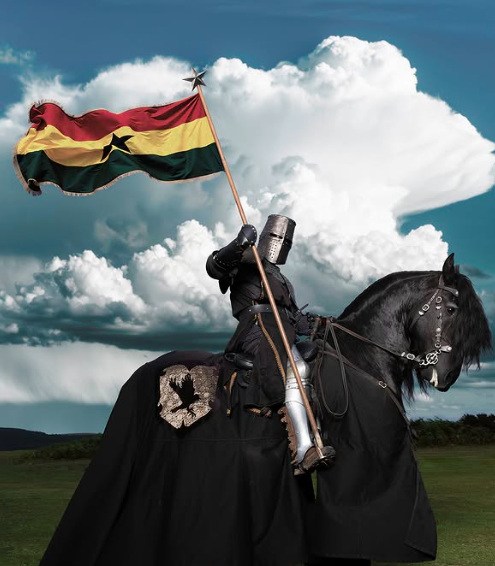
Stefan Weil's career began with a cup of tea. At 16 he had a side job as a photographer's assistant in London, mostly making tea and coffee, and it was enough to hook him. Since then he has photographed gigs, a far-right protest that made him walk away from photojournalism, a portrait for Red Bull, and a master's project about Black knights that involved horses, armour and 15 hours of driving to Wales and back in a single day.
Stefan is in his mid-twenties and goes by @stefanthephotographer online. Born and raised in London, he makes work about who gets to be part of a story, and who gets to be the hero of it. He has been following a ten-year plan since he was 20, and he is roughly halfway through.
We sat down with him to talk about the gigs, the knights, the great horse hunt, Diesel, his next project on boxing, and why he is never doing a big personal project alone again. At the end Stefan told us it wasn't even an interview, it was a conversation. We'll take that.
Tea first, camera later
Let's go back to the start. Before the fashion, before the knights, there was music photography. What was that world like for a kid with a camera?
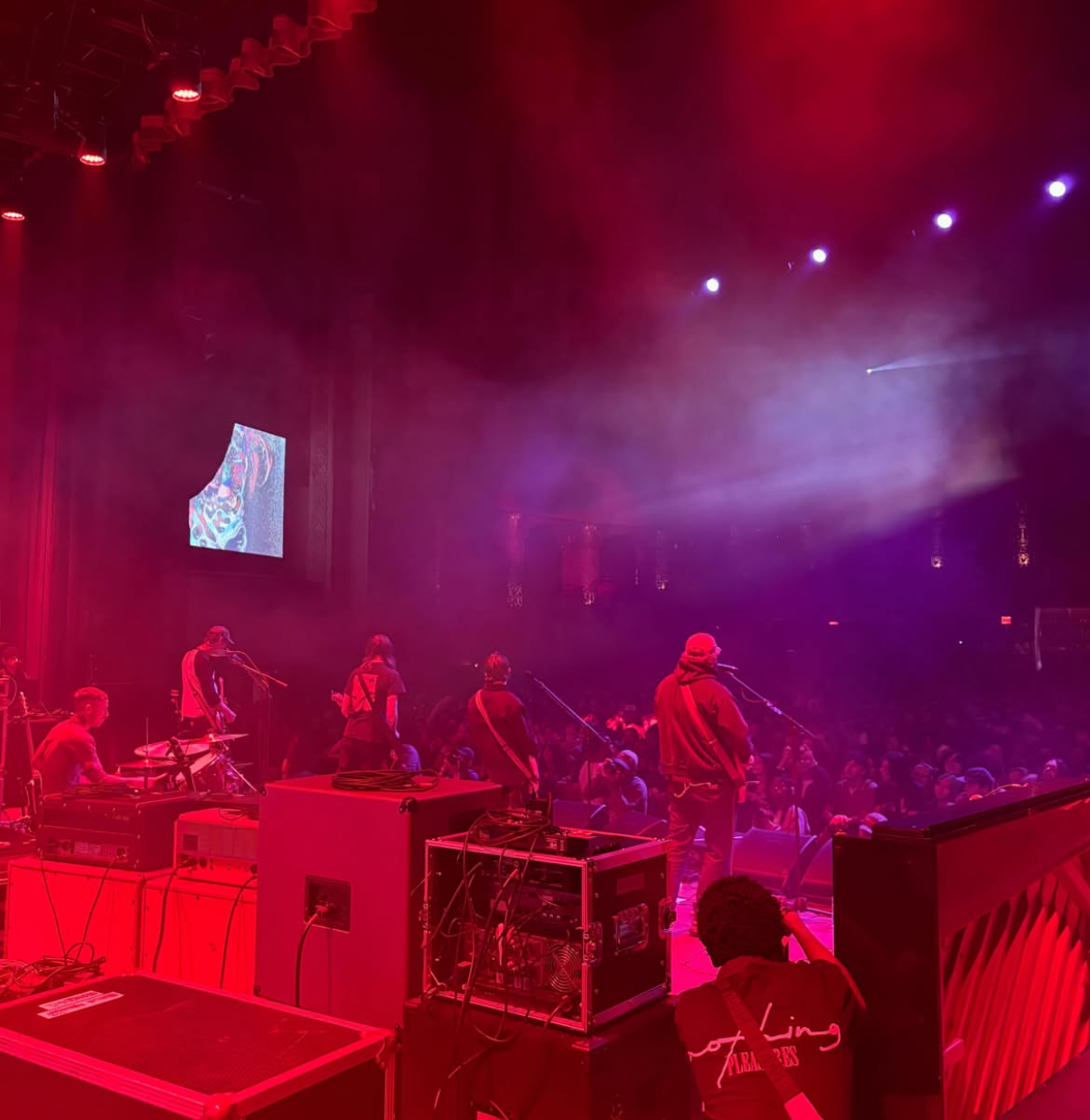
It was a crazy one. I think I shot my first gig in 2017, and it was at this massive venue called Brixton Academy, which was really wild. I just asked. I'd been doing a lot of street photography up until then, but I hadn't taken it very seriously. I was just having fun with the camera. Then you get to this wide world of lights and personalities and I fell in love with it. After that it was gigs almost every night, going to all these music events and trying to find my place in that world. I was still in high school. I was about 17.
I started working in photography long before I picked up a camera. At 16 I had a side job as a photographer's assistant, very, very randomly. I was making tea and coffee, but it was enough to get me interested. If it hadn't been for that, I never would have become a photographer.
Were you one of those kids who was always obsessed with taking pictures?
I think there's something instant about it. You make something, decide whether you like it, and make something else straight afterwards. As a kid I drew a lot, I painted, I sculpted, I was always trying to figure stuff out, and photography was the one thing that kept my attention. The minute I got a camera I wanted to do it again. I think that's because it's the most scientific of the art forms. Until I was 18 I was studying maths and physics at school, so I never thought I'd be an artist. It was just a hobby. I loved the problem solving, the analysis, the really technical side of it. It felt like two worlds colliding.
So photography is basically art for people who like maths.
Exactly. If you want a certain look, you do a bit of maths and you can figure it out. Then I started shooting on film and it became even more technical and scientific. I just loved it.
Culture vs. commerce
You talk about culture and commerce like they're two different jobs. What changes when there's a client paying?
With commercial work you have to take a step back. They're there for what you do best, and often it's because they like your personal work, but you have to be a bit detached. You can't go in with the control you normally expect, and you make a lot more compromises.
With culture, the difference you notice straight away is that I have to ask permission. If I'm photographing a community that isn't mine, like a niche music event or a subculture I'm not part of, it's about having really open conversations. You find out more about people and involve them in the process, with them explaining to you how things happen.
The knights
Okay, the knights. Black medieval knights, horses, full armour. Nobody scrolls past that. Where did it come from?
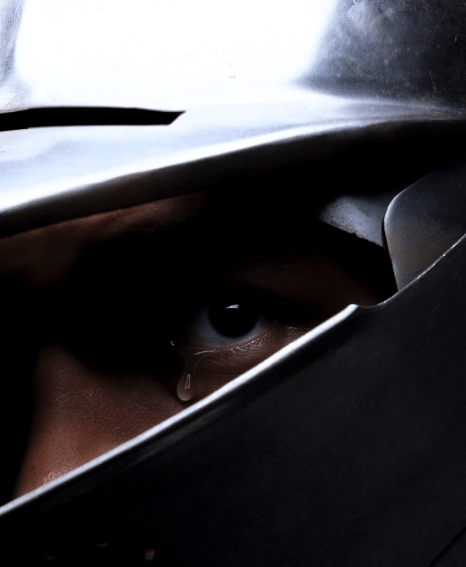
That was quite the process. It was a couple of years in the making. I had the first idea back in art school, maybe 2021. I just wanted to have Black knights, and that was it. There was nothing else to it. Then every once in a while I'd read a book and think, okay, that's relevant, and I started to realise it was going to be much bigger. I wanted to tell a story about belonging and identity, and I realised that my love of medieval Britain is because I grew up British. I've lived in London my whole life, I went through the British education system, I've lived in British culture all the way through. I am British, so in a weird way it's my heritage.
I wanted to feel I could be part of that story, because I'm part of the story now. I ended up wanting to make something that would have inspired me as a kid. Something that would have inspired five-year-old me, because five-year-old me didn't see anyone who looked like me on TV. I didn't see anybody Black as the hero of anything until I was a bit older.
Don't get me wrong, it's way better now, but I don't think it's perfect, and I want to be part of that progress. I want to start discussions about what identity means to people and what it means to be Black and British, because in the scheme of things it's a very new demographic. A lot of the Black British population were first-generation immigrants until quite recently, so the concept of a Black British identity is only really emerging now. The biggest Black British artists are still yet to be born. I find it fascinating to see how that develops. What I like about artists is when there's a social purpose too.
The great horse hunt
Be honest. How does a student on a master's budget find horses, armour and riders?
To be honest, it was great difficulty. I was just audacious. A lot of people told me no, and I kept asking until people said yes. It was my master's project, so I went in with a shoestring budget and hopes and prayers, and somehow it paid off.
Compared with the average student I was really fortunate. I had such a history as an assistant and a gaffer that there wasn't a part of the process I couldn't figure out how to make do. When I told my lecturers about it, they'd say they couldn't see how I'd managed on that budget. I don't know either, but I can figure it out. It was years of assisting, lighting research, testing things, doing pre-vis modelling. There's some great software for lighting tests before you even get on set. You can set everything to size and height and work out the power of the lights you need. I figured out I could shoot the way I wanted with a cheaper set of lights, which saved me about £200 of my budget. It's all these little bits pieced together.
Finding the horses, I won't lie to you, was one of the hardest things I've ever done. It took me three months of talking to basically every horse stunt performer in the UK, and some in France and Spain. There are jousters in Spain. Everyone was either too busy or wanted to charge me too much. Somebody quoted me about £2,000 for the day, which actually makes sense. It's two horses, a rider, full sets of props and armour. I couldn't afford that.
So I'd say, look, I'm really sorry, I can't afford that. Can we do an exchange? I'll photograph your team and your horses and make an ad for you. A whole campaign in exchange for me shooting my project. Eventually I found someone who didn't even care about the exchange. They just believed in the project and said, look, you can cover the costs. I'll forever be grateful, because if that hadn't worked out, the project would have been completely different.
Whoever that was, we owe them a drink.
Honestly, he was lovely. Driving to Wales and back in a day was 15 hours, with a three-and-a-half-hour shoot in the middle.
Fifteen hours in a car for three and a half hours on set. Did it pay off?
It worked.
How a job works
A brief lands in your inbox. What happens next?
When a call comes in about a shoot, the first thing is figuring out whether I'm aligned with the work. I read through the brief and the treatment. Sometimes it's not my kind of work and I go in as a professional. That's often pretty by the numbers. They already know what the lighting should look like and which images they need, and I'm there to deliver technical competence.
If it's something that speaks to me, it's straight into research. I sit in a library and go through books and art references. A lot of the people I reference aren't photographers. I tend to avoid photographers, and not because I don't read photography books. I have a bad habit of buying them. It's because other art forms are much less constrained by reality. An illustrator can draw something that has zero bearing on the world. You can get the feeling a pose or a set gives you even if it isn't physically possible, and then dissect what works and what doesn't to make something unique. After that it's a pretty standard production phase. You talk to the producer and the stylist, make sure everyone is on the same page, and then you bring it to life.
And how do brands actually find you? Is it the algorithm, or something else?
Sometimes I pitch. I've gone out of my way and said, hey, here's my work. Other times journalists or writers have reached out because of a body of work they know I'm making. I've been very lucky, because it has always been organic and about stuff I'm already doing. It lets you know you're in the right place at the right time.
I still do a lot of work in the music industry with a UK footwork collective. They've got great music and a great crowd, and they're on their way to the mainstream now. People reached out and said, we've seen you've been photographing this for six or seven months, we'd love to do a story about it. Commissions come from the weirdest places. The Red Bull one was a portrait commission that came in randomly, midweek. They just asked if I'd photograph this person for them, and I said of course.
Walking away
You were a photojournalist, and then you stopped. What happened?
I was a photojournalist for a couple of years. I say a long time, but it was during Covid, so it felt much longer than it was. I was asked to go and photograph the far right at a protest, a lot of white nationalists, and that's when I really started second-guessing the work. It's what made me pull back. It was right before a massive clash in Trafalgar Square between two protest groups, the far right on one side and the left and far left on the other. The tension was so high, and I realised I didn't want to be doing this work anymore. It's important to document these things, but sometimes you don't want to be the one doing it.
Was it the fear of getting hurt?
Mentally, it's hard to be in that situation. But I respect a lot of those journalists, because it's necessary to tell the truth and show that white supremacists and fascists still exist, and that they're dangerous. You do it, though, not me. It doesn't have to be me this time. There are fantastic photographers in London who still do it. I didn't feel like I was leaving anyone to drown. There's plenty of talent, and photojournalism is very competitive.
Race, class and the comments section
Straight question. Has being Black ever closed a door for you in this industry?
Oddly enough, no. I've had a lot more problems to do with class in the workforce, but nothing overtly to do with race. The issues I've tackled as a Black man have been more interpersonal, and more in the art space than the workforce. I don't think I've ever not got a job because I'm Black. I do think I've missed opportunities, or been passed over because I'm not the right demographic, and people do treat you differently. For a long time nobody knew what I looked like until I turned up to a job, and people would be weirded out that I was Black when I arrived on set, which was odd. All things considered, I've been quite lucky. There have been things that could have been racist, but nothing I could point a finger at and call direct racism.
I get lots of it online, though. I'm making work that's the antithesis of the far-right white British thing that's happening at the moment, so I get lots of racism there. I used to delete the racist comments. Now I just leave them. I can't be bothered, it's not worth it. And it's great for engagement, so I'll leave it up and let people argue in the comments.
Diesel and the ten-year plan
What's the one email that would make you drop everything and say yes without reading the brief?
If Diesel sent me an email today saying come and photograph this, anywhere on the planet, I'd go. I wouldn't think twice. They've been the dream client since I was 18, since I took my first fashion image, and I'm calling it a fashion image lightly because 18-year-old me was not any good. There's something about their style and their production that I love. They work with some of my favourite stylists and set designers. I could get there and find out I'm photographing, God knows, belts, and I'd be like, we're going to make this the sickest belt shoot of all time. That would be the commission for me, as of right now. It might be different in five years.
Okay, five years from now. Where are you?
I've been working towards this for a while. I've had a ten-year plan since I was 20, and I'm 25 now, so I'm halfway through.
Most people can't plan their weekend. You're 25 with a ten-year plan?
The plan had me finish my art degree, do a master's and then make my first big project. I've done those three, and I've got two things left for the next five years: open a studio and start an agency. Some people tell me I should dream bigger, but I've always been a realist. I want achievable goals. I don't want a million of them, just a few really concrete things I can say I have or haven't done. In five years I want to have a studio, that's it. My own studio, doing only my kind of work. I've just finished my degree and I'm still taking jobs that have nothing to do with my style, and there's no shame in that. I'm really grateful to be able to stick around in the industry and keep making art.
A studio needs people. Who are you looking for?
Yes, I want a team, and slowly I'm finding people. It's tough, though, because you have to think about whether you could work with someone for the next ten years, and whether they'll stay in the industry, because a lot of people drop out, and for good reason. It pays like crap for a long time. You work unreasonable hours, you do unfair jobs, you deal with horrendous clients. So I look for people who match my style and have the same drive. I have no plan B. I need somebody else who has no plan B and just wants to be a stylist or a creative director.
I do a lot of work with a friend called Yoshi, and I'll probably work with that man until I die. We became friends in the industry and we've been really close for years. We both want to open an agency for people of colour and underrepresented groups who are making really interesting work. It's tough when you don't have the connections yet. We both know a lot of people and we still don't know enough.
The people who helped
Assistant, gig photographer, photojournalist, documentary, now fashion. That's a lot of lives for someone who's 25.
It's been a really interesting one. I've done a lot for someone my age and I'd like to say I've been reasonably successful. There's no fame or glory yet, and no big pay cheques, but I've managed to earn an acceptable living as a student and now as a grown man. I only got that because I got really lucky. If I hadn't started as an assistant, I wouldn't have had the skills to earn money assisting, and I'd have made so many more mistakes as a photographer. Assisting built my foundation. I went from live music to photojournalism, from photojournalism to documentary, from documentary back to music, then into fashion, and now into whatever weird fashion hybrid I'm doing. Without it, everything would have taken me two or three times as long.
I've fallen into this wonderful network of people who have been incredibly helpful, nurturing and supportive. You ask a question and they say, here's how you do it, or, come with me and I'll show you. What a privilege.
We know that feeling. No resources, nothing to prove what you're worth, and then the right people show up.
Exactly. All of a sudden these really lofty ambitions become attainable. It's the people you never thought would help who, when you ask, just do it. They do it because they have the same passion and the same vision.
Round two
Is there a secret project? Give us something.
We've got a big one on the books, another big personal project, and it's going to be very much like the first one, very much like the Knights. It's about boxing and a lot of the history of it. I can't reveal more than that, but hopefully I can make it bigger and better. This time I'll set aside a proper, realistic budget and get a team in, because I did the first project all alone and I am never doing that again.
Lesson learned, then.
Exactly. When you're doing personal work it's really hard to find a team, because when it means so much to you, you don't want people changing it or influencing how it ends up. Now I've had a bit of space after that project, and I realise it wasn't the right way to do it. But I wasn't wrong to feel that way either. It's been six months since the project was released and I've worked with a lot of people since. I was right to be worried, but I should have faced that fear. So I'll be facing it next time. I'm really, really excited to see how that work turns out.
Stefan has a second big personal project on the way, this time about boxing, with a realistic budget and a team. We've already asked for part two, and he said of course.
A lot of people told him no. He kept asking.
Find Stefan on Instagram at @stefanthephotographer.