It starts in a garage. An ordinary routine that takes a wrong turn. That's how almost all the stories Salvador Gutiérrez Solís began posting on X in 2020 open: everyday life, one detail out of place and, suddenly, the ground giving way. Thread by thread, he built a community of readers who kept coming back for the next scare.
Now they're a series. Los hilos del miedo arrived on Prime Video on 19 October: eight episodes of psychological suspense, each about five minutes long, and the first short-form fiction from Sony Pictures International Productions in Spain. It had already passed the toughest test there is: the pilot, El garaje, premiered on TikTok in 2024 and racked up 28.4 million views.
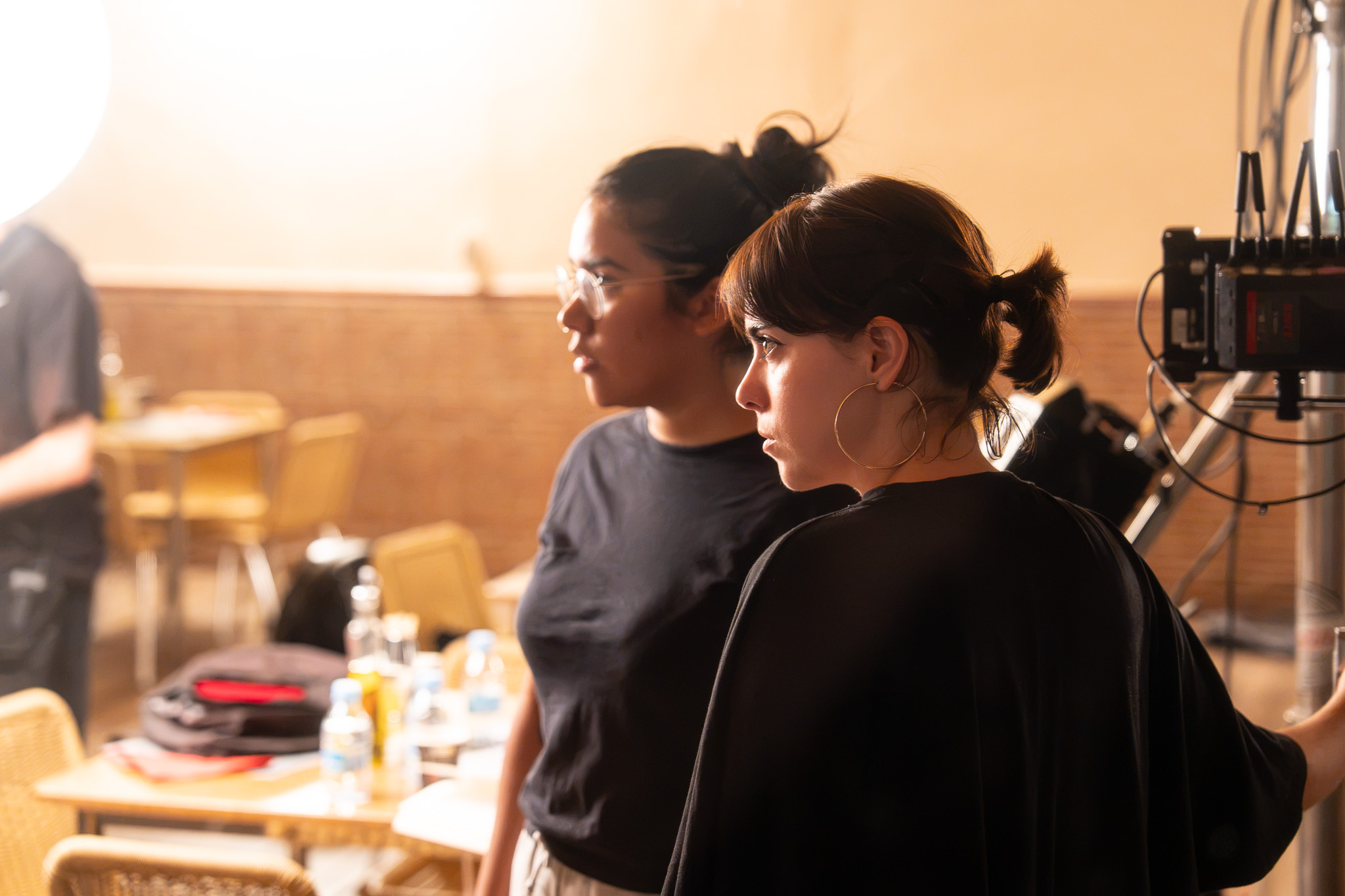
Behind the camera is Mey Montero. Born in Madrid in 2000, she studied Humanities and trained in film directing at TAI, the school that has kept backing her outside the classroom. She comes from music videos, advertising and the short film Chiquita Piconera, a story of folklore and legend. For the series she surrounded herself with a crew of professionals who knew each other from the school's ecosystem, with at least three years in the trade and heads of department with more than fifteen.
Seven shooting days, one per episode, and three weeks of pre-production. We asked her how you fit fear into five minutes and what happens when every minute is worth its weight in gold.
The call
Let's go back to the beginning. The phone rings and someone says "Prime Video". Who was it and what went through your head?
The first call came from Ana, head of production on the Factoría de Creación side. The project was born as a collaboration between Sony Pictures and Escuela TAI, the university where I not only trained as a filmmaker, but which has since kept backing the projects I've gone on to develop outside the university setting.
Because of the nature of the short format and the young target audience, they wanted to make a strong bet on finding new voices and emerging talent who could bring a different perspective to telling the project. I think it was a real success on the part of the production companies involved. One way or another, much of the technical crew had worked together on earlier projects thanks to being part of the university's ecosystem, and it was a huge opportunity to reconnect on such an ambitious and demanding project.
Were you one of those people reading the threads in the middle of the night during lockdown?
The threads went viral during the pandemic, and I remember reading them during lockdown. They really resonated with young people. I think the horror genre and the format of spreading through social media were a very good formula, and it came at a moment when people were feeling fear and uncertainty about the reality we were living through.
The adaptation was handled by Lucía Bussion, a screenwriter and also a former TAI student, who worked hand in hand with Salvador Gutiérrez and the executive producers to get the scripts done in record time. I was involved in that development work from a more secondary position, but it was also really interesting to witness such a creative process as adapting stories with so many plots and layers into such a short format.
Your short film Chiquita Piconera came from folklore and legends. The threads come from a car park and a withheld number. What's scarier, the ancient or the everyday?
I think right now we're in a really good moment for the horror genre. We're seeing big majors betting on the genre, from folk horror to more contemporary futuristic narratives, and I think both approaches coexist pretty well. Horror films always end up sneaking into the box-office rankings and, this year in particular, we've seen some genre films that came from a more independent production setup overtake other big productions on the inside.
I think they're two horror subgenres broad enough that you can't really make general comparisons, but I'd say their main difference lies in communication with the outside world. A folkloric, period setting, usually isolated and shot through with religion or superstition, has a very different relationship with the outside, or with the external threat, than narratives set in hyperconnected societies. We actually see it in Los hilos del miedo: many of the threats come from unknown numbers, from strangers knocking at the door, or from a more digital kind of horror.
From thread to script
The script is credited to Lucía Bussión. Where does the screenwriter end and the director begin?
In directing and editing there's always a huge amount of rewriting. The beautiful thing about fiction is that it's a constant exercise in interpretation and, as a director, you have to learn to orchestrate every element so they move along the same creative line, while always giving the departments room to express their vision of the project freely. It's not only essential for enriching the project with different perspectives, it's also the best way to enjoy the process and make it fun for everyone involved. I think when people enjoy their work and are able to play, it really shows in the final result.
In this case, the first work of translating the threads came from Salvador, who then handed over to Lucía. From there, we worked with the script as a working document. Through the shooting script, the breakdown of rhythms and the characters' intentions, among other elements, there's an immense amount of rewriting.
In the rehearsal room it's essential to be open to reworking and questioning the characters together with the actors, digging into the subtext of the dialogue to build characters they can work with from an authentic place, and being open to tweaking the lines so they gain rhythm and believability. In post-production, of course, there's also a huge amount of rewriting.
The shoot
It's been reported that it was a crew of students who had never set foot on a professional set. How much truth is there in that?
Everyone on the crew had worked on professional shoots before. We all had at least three years of experience since leaving university, and some of the heads of department had more than fifteen years of experience.
So, zero students?
Nobody on the crew was a student :)
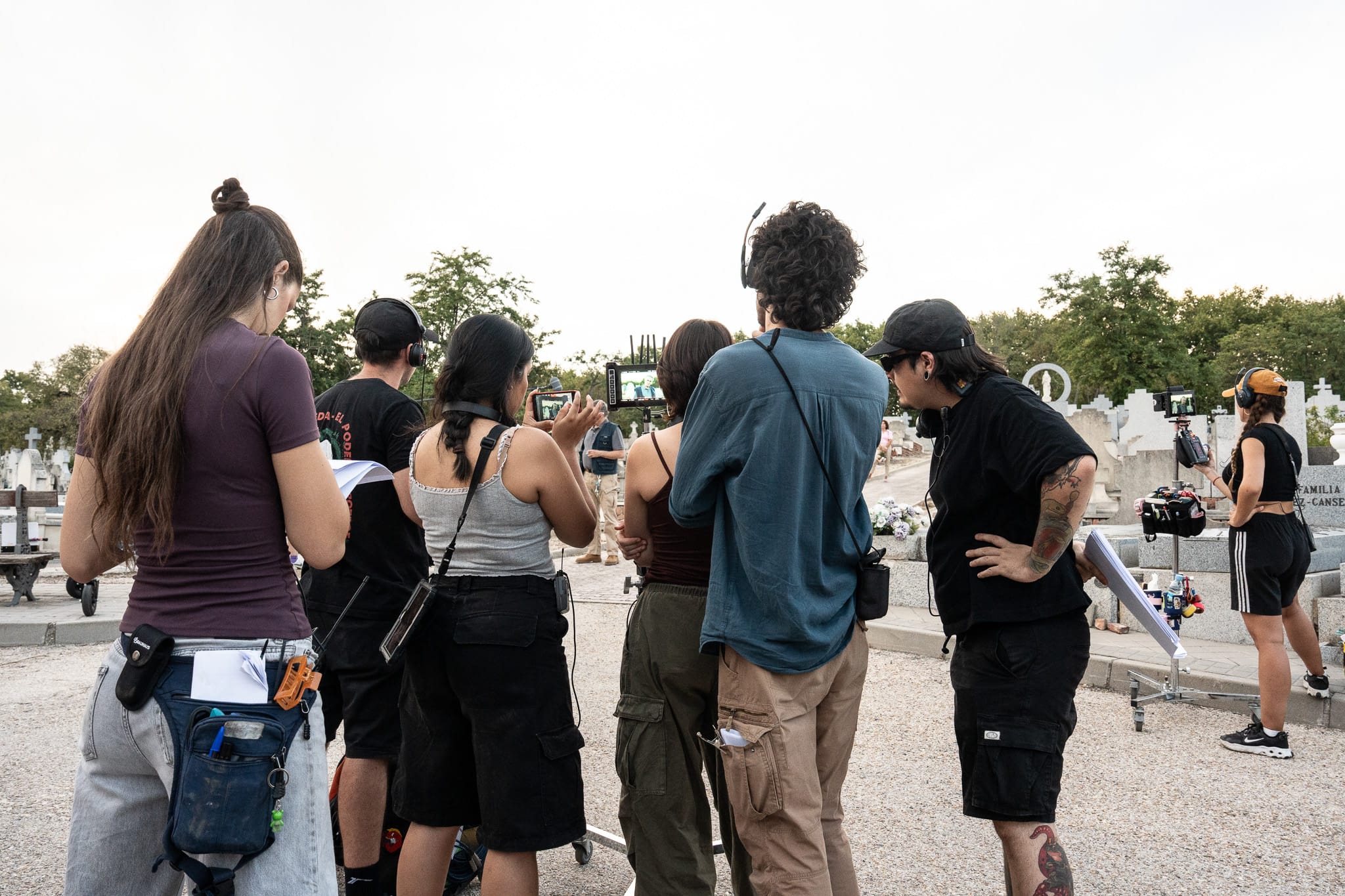
How many shooting days for eight episodes? What got left behind to make everything fit?
The Garaje episode had been shot two years earlier as the pilot, and we had to get each of the remaining episodes done in a single day, so in total there were seven shooting days. It was a real challenge.
Pre-production lasted barely three weeks and the shoot happened in record time. I had to be very selective with the shooting script to make every shot as economical as possible. In many cases I had to be more functional than creative, but I also think prioritising the story's readability and finding the best way to tell it is part of your responsibility as a director. You have to know how to put the story, and telling it well, above your own creative tastes or whims.
In most cases we managed to find a good balance between the two, so I'm very happy with the final result. I don't think it was easy at all, given how little time we had.
Alejandro Tous, Mario Mayo and five minutes to build a character. How do you direct that?
In most episodes we had the chance to spend a day before the shoot on rehearsals. I think being able to rehearse calmly and in a suitable space is super important for setting the tone properly, getting to know the characters, improvising beyond the scenes that are going to be shot and gathering material to start building the intentions of the text.
It's one of my favourite phases, above all because during the shoot there are so many things happening, so many demands and decisions that, often, you can't give the actors all the attention you'd like. In the case of Desconocido, for example, it was impossible, for logistical reasons, to rehearse with the actors beforehand, so we had to work a lot on the fly and do more takes.
When you work with actors who are so professional and so experienced, everything is much easier and more fluid. But it's true that leaving things until the shoot means more risk, above all because you have to communicate quickly and work in the heat of the moment.
Now be honest: what went wrong? There's always one of those days.
On a production of such a large scale, it's very difficult, if not practically impossible, for things to go wrong. I don't remember a single fire on set (if there had been one, I'd definitely remember it, hahaha). Overall, I felt very confident and secure, I slept brilliantly during the shoot and I had blind faith in the crew and in what we were doing the whole time.
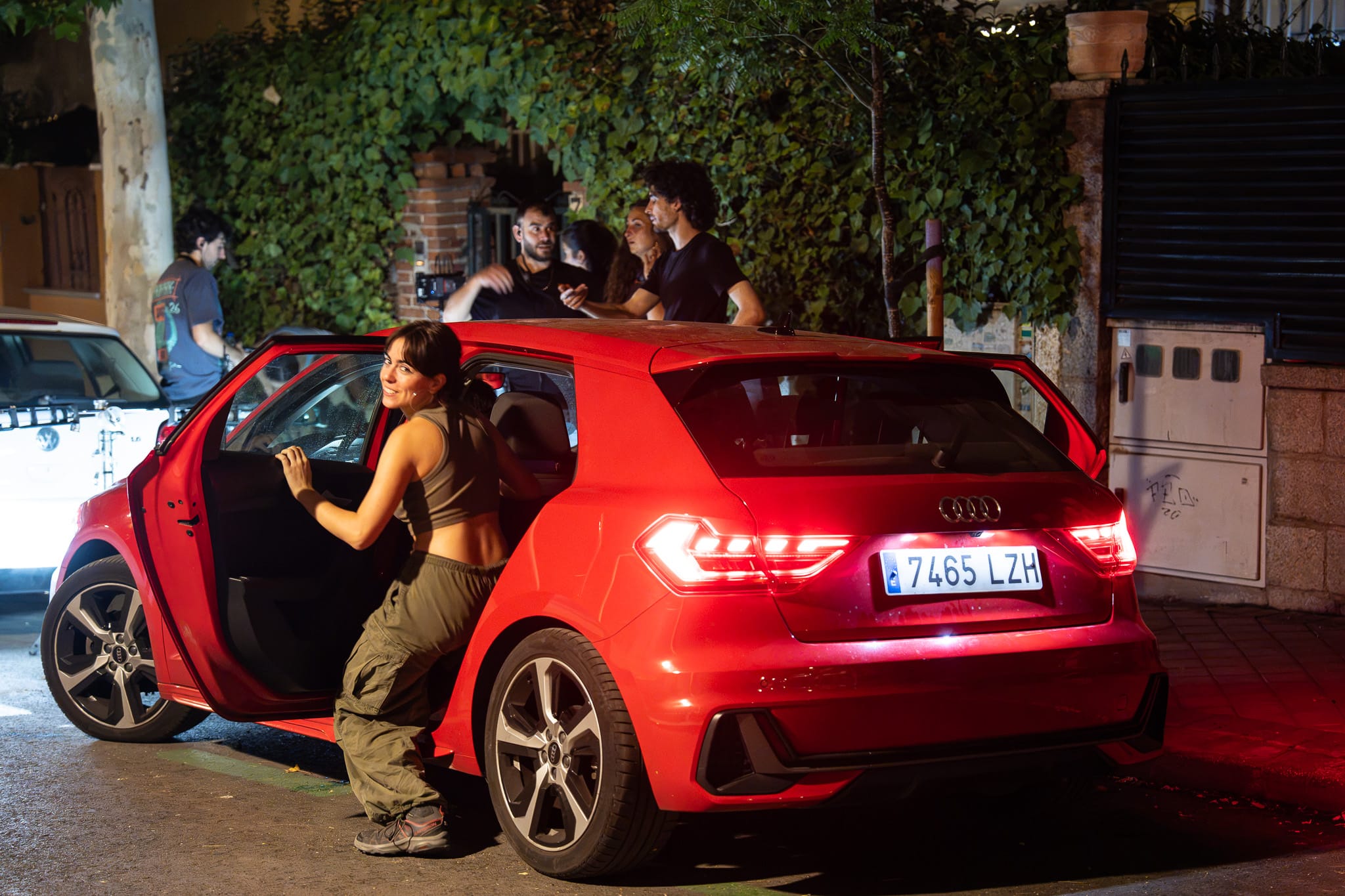
Maybe where we had the most trouble was fitting everything into the shooting schedule. Bear in mind that each episode had to be wrapped in a 9+1 shooting day, so every minute was worth its weight in gold. On the Linterna episode, which was without doubt the most ambitious, we finished the shoot on time, but only just. We were about to drop a shot that was essential to telling the story and, luckily, we managed to get it done in record time.
Fear in five minutes
Trick question: is it easier to scare someone in five minutes or in two hours?
They're different ways of building horror and, to do it, you have to use different formulas. It's a super flexible genre, and very open to being combined with other subgenres. That's why we tried to give each episode its own personality within horror. There are episodes with a more classic kind of horror, like Linterna; others closer to thriller, like Número oculto; and others that border on comedy, like Compañero de viaje.
They're different mechanisms for creating unease and, precisely, that distinction between the stories is what made the process more fun, because it let us play with different formulas for building tension.
Premiere night
19 October. Where were you when the series went out into the world?
We premiered the first three episodes at the Sony auditorium in Madrid. It was a great opportunity to watch it first with the technical and artistic crew, the production companies and the invited press.
The pilot racked up 28.4 million views on TikTok. Did that number push you or haunt you?
Honestly, I didn't take it into account at any point. For me, what mattered was getting the work done in the best possible way and giving 100% of myself. I think that demand would have been there whatever the production conditions or the expectations of the series' impact.
What's next
Salvador says he's not short of threads. Season two?
As many as it takes!
Music videos, ads, short films and now horror on a streaming platform. What do you want to be known for?
I'd love to be known as a versatile profile. Of course, my short films and my own fiction projects are my babies, and you always want them to get the recognition you've been working for. But I also find a huge sense of fulfilment in directing commissioned work, as was the case with the series. I take it as a creative challenge that motivates me and that I enjoy enormously.
That's why music videos and advertising also seem like a really interesting field for experimentation to me, especially when you work with production companies and clients who don't just accept creative freedom, but value it and bet on it.
Quick questions
The film that scared you most as a child.
When I was very little, the forest scene in Snow White.
A Spanish legend that deserves its own series or film.
The lake of Sanabria.
Your everyday fear.
Bureaucratic paperwork and the tax agency website :')
A director who inspires you.
Paula Ortiz.
What's your biggest wish?
At this point, that the housing decrees get approved and that our generation can live, work, create and dream beyond paying the rent.
Los hilos del miedo is now available on Prime Video.
Big by design.